
Avido’s new WiBa Wireless and Stackable Power Bank and Charging Pad combines wireless charging with a wireless power bank, allowing for a completely wire-free iPhone charging experience at home and on the go.
The WiBa kit comes with three pieces: a wireless charging pad, a 5,000 mAh battery pack, and a cable plus power adapter to power the wireless charging portion of the device. The battery pack is designed to charge on the charging pad so that the iPhone can charge on top of the battery pack, so you can charge both the iPhone and the battery pack at the same time.
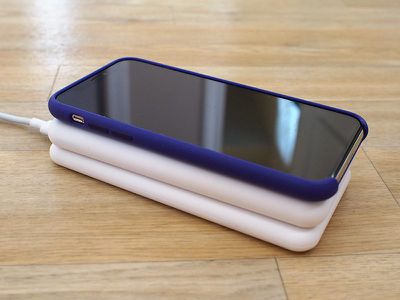
Made from a white plastic with a soft rubber coating, the WiBa Wireless Charging Pad is about the size of the iPhone X in length and width, but is much thicker.
The accompanying power bank is made from the same material and is the same size and length as the wireless charging pad. The power bank is thicker than the pad, which means it’s several times thicker than an iPhone X. In theory, you could pocket the same power bank as an iPhone X, but given its thickness, I’m not sure you’d want to.
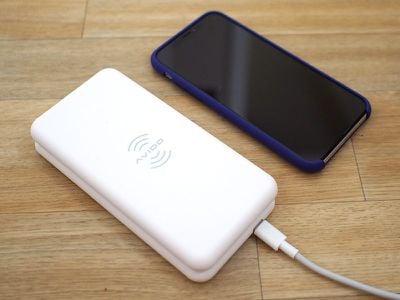
The power bank fits better in a bag or backpack, but it’s still going to take up more space than competing power banks with the same battery capacity, which is a downside of these accessories.
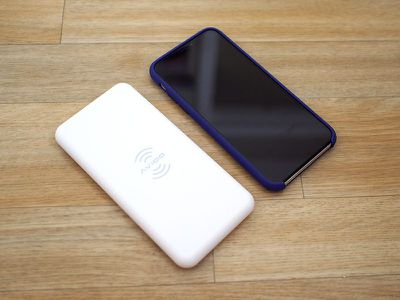
Because it’s about the same size as the iPhone X, the wireless charging pad has a slightly larger footprint than most upright wireless chargers, so it’s going to take up more desk space than some charging options. Compared to round flat chargers, however, the WiBa’s rectangular shape takes up less overall desk real estate.
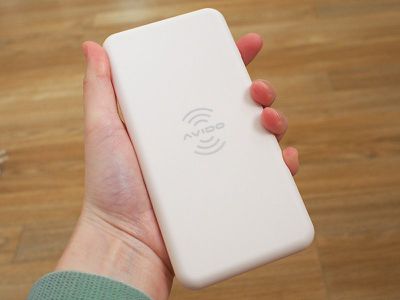
Underneath the wireless charging pad, there is a magnetic attachment area where the power bank fits so it can charge wirelessly. The magnet is great because the power bank always slips into place when it needs to be charged with the charging pad, so I never had to fiddle with it to find the ideal charging alignment.
The power bank also has a magnet, which works with a separate magnet attachment that is available for the iPhone to hold it in place while charging wirelessly. My test unit didn’t come with this accessory so I wasn’t able to try it out, but for those who don’t mind magnets stuck to their iPhones with glue, it should make wireless charging via a power bank more convenient.
Without magnets, charging an iPhone with a wireless power bank isn’t really convenient unless it’s set on a flat surface because there’s no way for the power bank to attach to the iPhone.
The wireless charging pad has a single USB-C port for connecting it to the included power adapter, while the power bank has both a USB-C port and a USB-A port. If you don’t want to use a wireless charging pad, the USB-C port can be used to charge the power bank faster, while the USB-A port can be used to charge devices that don’t support wireless charging.
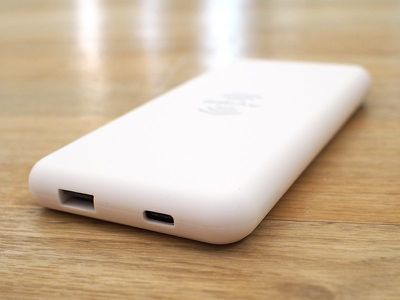
Both the power bank and charging pad have an Avido logo front and center, which I wasn’t a fan of. The power bank has four white LEDs on one side that let you know when it’s charging and a bright green LED on the other side. Both the green LED and the white LED come on when the side button is pressed and charging is activated, and the green LED in particular is confusing. But it stops after a few minutes.
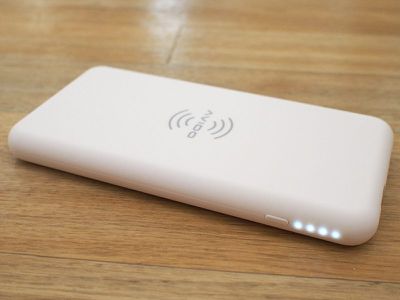
While iPhone 8, iPhone 8 Plus, and iPhone X support 7.5W wireless charging, WiBa is limited to 5W charging speed, which is another downside of the product. It charges at 10W for Android devices, but Avido told me it’s capped at 5W “for safety precautions.”
Avido also mentions that there is often not a huge difference between 5W and 7.5W charging, which is not true. I tested a lot of wireless charging options, both 5W and 7.5W. In optimal conditions, you can get about 10 to 12 percent more charge in an hour with a 7.5W charger, but the difference can be less based on temperature and other factors.
I still generally find it worthwhile to choose 7.5W over 5W when possible, so not seeing 7.5W support on the WiBa is disappointing, especially at the $100 price point.
In multiple tests in airplane mode and starting from a 1 percent charge, the WiBa wireless charging pad and power bank charged my phone from 28 to 34 percent in an hour, which is what I’d like to see from 5W. The charger is 28 to 34 percent less charge than you’d expect to see in an hour from a wired power bank, so it’s not the most efficient method of charging on the go.
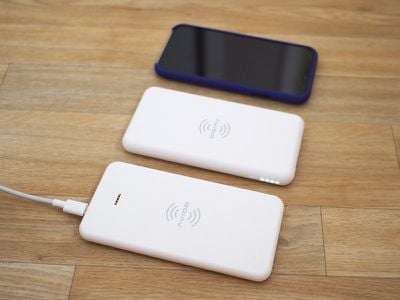
The WiBa boasts a 5,000mAh battery that provides enough juice to fully charge an iPhone X once from a dead battery. In two of my tests, the WiBa power bank charged my iPhone X to 85 percent before dying (again in airplane mode) but in the other four tests, it charged it up to 100 percent with about 5 percent of charge left.
It’s safe to say that for iPhone X, and iPhone 8 Plus, which have similar capacity batteries, you can count on an additional full charge from a fully charged WiBa power bank. You can get one and a half to two full charges for the iPhone 8, which has a smaller battery.
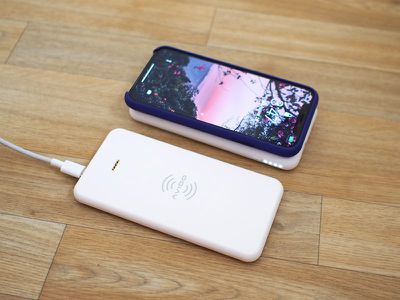
As with the 5W charging limitation, I found the WiBa Power Bank’s 5,000mAh capacity disappointing given the accessory’s size and price.
last row
The WiBa charger is a nice idea, and I can’t argue that it isn’t convenient, but it doesn’t feel like it offers enough utility to warrant the high price tag.
It’s basically a 5W wireless charger paired with a 5,000mAh battery pack. You can buy a 5,000mAh power bank on Amazon for about $10 to $15, and a wireless charger for about $15 to $20, for a total of $25 to $35.
That means Avido is charging quite a premium for convenience. Of course, charging from a power bank doesn’t require plugging in your power bank or iPhone while charging, but what’s the value of that shortcut?
I’d personally opt for a standalone 7.5W wireless charger and wired power bank for this particular solution, but those looking for a grab-and-go solution where it’s easy to charge extra batteries might prefer the WiBa setup.
I would have really liked to see a higher capacity battery with the WiBa, as an extra charge for $100 doesn’t seem worthwhile. Power banks that offer three times the capacity cost less than $100
It’s also worth noting that wireless charging may not be the best power bank solution. Most people probably reach for a power bank when an iPhone’s battery is seriously low, and faster charging speeds are preferred in these situations. As a reminder, an hour of charging with WiBa got my iPhone X from about 28 to 34% in multiple tests.
how to buy
The WiBa Wireless and Stackable Power Bank and Charging Pad can be purchased from the Avido website for $99. An additional charging pad can be added for a total of $139.
Note: Avido provided MacRumors with a WiBa wireless charger and power bank for the purpose of this review, which was returned to Avido at the conclusion of the review. No other compensation was received.
