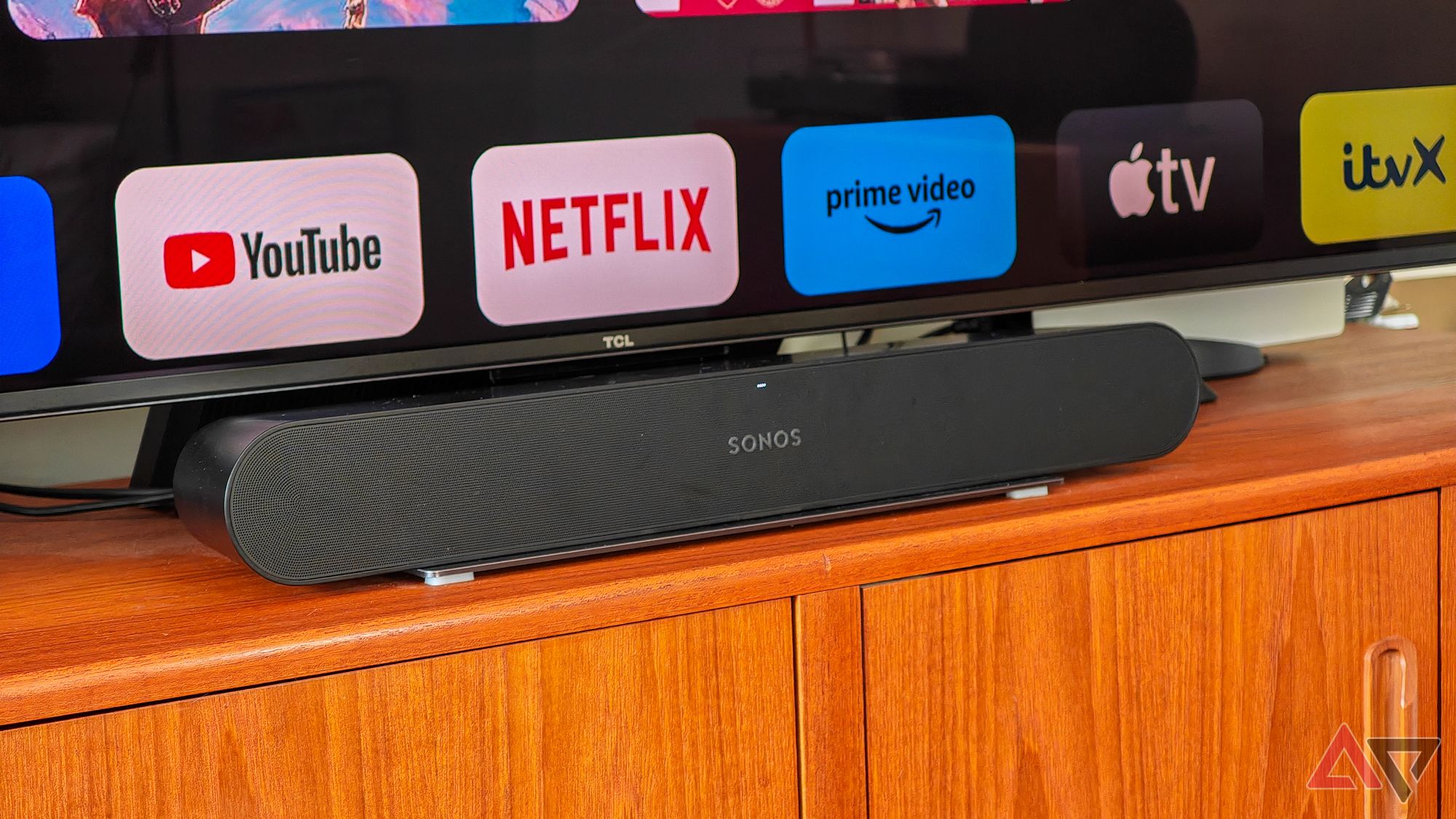
Sonos is known for its more affordable consumer audio gear, but not all of its products fall into that category. The Ray is remarkably good for what it offers—though not a true budget buy—and serves both as a decent entry-level Sonos option or an additional speaker for a smaller office or bedroom.
The Ray won’t match the Beam or Arc speakers in terms of pure sound, and more importantly, it lacks some key features—the lack of HDMI is particularly annoying. But you’ll be hard-pressed to get better sound for under $300, especially if you already have other Sonos speakers in your system.

Sonos Ray
The Ray may be Sonos’ smallest and cheapest speaker, but the company hasn’t skimped on the sound — it delivers clear, deep bass, as long as you use it in smaller rooms. Just be aware that the company’s cost-cutting has come by forgoing features like HDMI input and voice control, so this product is designed for the essentials.
- Compact design
- reasonable price
- Clear and pure sound
- No HDMI input
- Trueplay is only available for iOS.
- Suitable for small rooms only.
Price and availability
The Sonos Ray launched in 2022, but since Sonos moves slowly, it’s still one of the company’s relatively new products. It costs $279, and you can get it directly from Sonos or other electronics stores. And considering the next Sonos speaker is the Beam (2nd Gen) at $499, that’s not a bad price at all.
What’s good about Sonos Ray?
All about sound
The best thing about the Sonos Ray is the sound it produces. This may seem obvious when you’re talking about a speaker, but the point is that this is a speaker with minimal frills and a focus on sound above all else.
There are four speakers here, a pair of tweeters and a pair of mid-range tweeters, which means there’s no dedicated output for the low frequencies. Instead, Sonos has relied on the mid-range tweeters to interact with its low-frequency reflector design and produce the low frequencies it needs.
Mostly, this works, as long as the room size is right. No, this won’t produce a lot of bass, sorry. But there’s a lot more noise than you’d expect from the size of the device, whether you need it for loud house music or the loud explosions in the latest Michael Bay movie.
Most importantly, the resulting sound is clear and crisp across the board. This clarity helps with dull dialogue, and gives the sound the complexity it needs to be a true music speaker for any room, not just a loudspeaker.
If you need more of it, you can pair the Ray with a Sonos Sub Mini to boost the bass or even connect it to some Era 100 speakers for a surround setup — though if you’re prepared to invest that much in your gear, you’re probably better off upgrading to the latest Beam.

Related
Sonos Era 100 review: Room-filling sound with thoughtful improvements
If this speaker proves anything, it’s that the new “era” of Sonos is going to be a good one.
Of course, you can also connect it to a Sonos network for multi-room audio with other Sonos speakers. This is as easy to set up as ever, giving you seamless sound throughout your home. The Sonos app also lets you adjust the speaker’s equalizer, turn off touch controls, and tweak other settings. It also acts as a hub for playing music on the speaker, so you can access multiple streaming services like Spotify or YouTube Music all in one place.
Of course, there’s another thing that might appeal about the Ray besides its price: its size. This thing is small for a soundbar, less than two feet tall, making it easy to fit on small shelves or cramped TV cabinets. It’s small enough to use as a desktop PC speaker—trust me, I’ve tried—though you’ll need ample workspace to get it out.
Available in white or black, its curved design is sleek and modern, and it’s the kind of speaker you’d be happy to display rather than hide, and the white model is especially suitable for wall mounting.
What’s bad about Sonos Ray?
A little decoration

So if the sound is great, what’s not great? Mostly, just a bunch of the luxuries and niceties that cheaper Sonos speakers lack.
The biggest issue is the HDMI input, which means you’re limited to using an optical cable to connect the Ray to your TV. This has some knock-on effects, but the biggest issue is that depending on your TV and remote, you may not be able to use the remote to control the Ray’s volume. This was the case for me, so adjusting the speaker output meant standing up to use the on-device touch controls or navigating through the Sonos app on my phone. This can be a big deal for me, so double-check compatibility before committing.
As expected, for the size, there’s also no support for Dolby Atmos (which won’t work without an HDMI connection anyway).
Like some other Sonos speakers, the Ray also lacks the option to connect via Bluetooth or 3.5mm. You probably won’t be using these options for your TV anyway, but that makes it difficult to use the Ray to play music from a friend’s CD player or phone since everything has to be handled through the Sonos or Spotify apps over your home Wi-Fi connection. Unsurprisingly, for its size, there’s also no support for Dolby Atmos (which wouldn’t work without an HDMI connection anyway).
Without microphones, you can’t control the Ray with voice controls or use it as a smart speaker. It also only supports the native version of Sonos’ Trueplay audio tuning technology, which requires an iOS device to set up—not a problem as long as someone in the house has an iPhone, but as an Android site, we feel obligated to complain about it.
Then there’s the final reason to be hesitant about the Ray, and back to the sound: just be aware of its limitations. This speaker is designed to power bedrooms, offices, and small living rooms. In any of these rooms, it will work fine, but don’t put the Ray by itself in a large living room or kitchen and then get upset if the sound is a little weak — in those rooms, you really need a Beam or Arc speaker.

Related
Sonos Arc Review: More Than You Need, Exactly What You Want
The Arc is the best soundbar for large rooms where money doesn’t matter.
My living room is open plan, which means it’s a bit larger by Ray’s standards, and at times, it shows. For music and most TV shows, it does the trick, but when I sat down to watch Mad Max: Fury Road, I found myself wishing the sound had a bit more depth. This isn’t the speaker’s fault, but keep in mind that even if the Ray is priced well, it won’t hold up in larger rooms.
Should you buy it?
The Ray is a great choice for several reasons. If you need a speaker in a smaller room or have to fit it in a tight space, its compact size makes it a great choice. Even in medium-sized rooms, it packs more power than you might expect for its price, and its ability to connect to other Sonos devices makes it ideal as an addition to an existing Sonos system or a starting point for building one.
Just be aware of the limitations you may face. You should be confident that the lack of an HDMI input won’t be a problem and that you don’t need features like Bluetooth, voice control, or Atmos. If you do need features like Bluetooth, voice control, or Atmos, you should spend more on the Beam or look at speakers from other brands that often have these features at this price, albeit usually with compromises elsewhere.
Sonos Ray
The Ray is Sonos’ smallest and least expensive speaker, designed for bedrooms and small spaces. It will work well in decent-sized rooms, but keep in mind that it won’t fit in large living rooms and lacks some of the fancier features and finishes found in other Sonos speakers.

Related
Best Speakers in 2024
Get one of the best soundbars to bring your TV sound to life.
