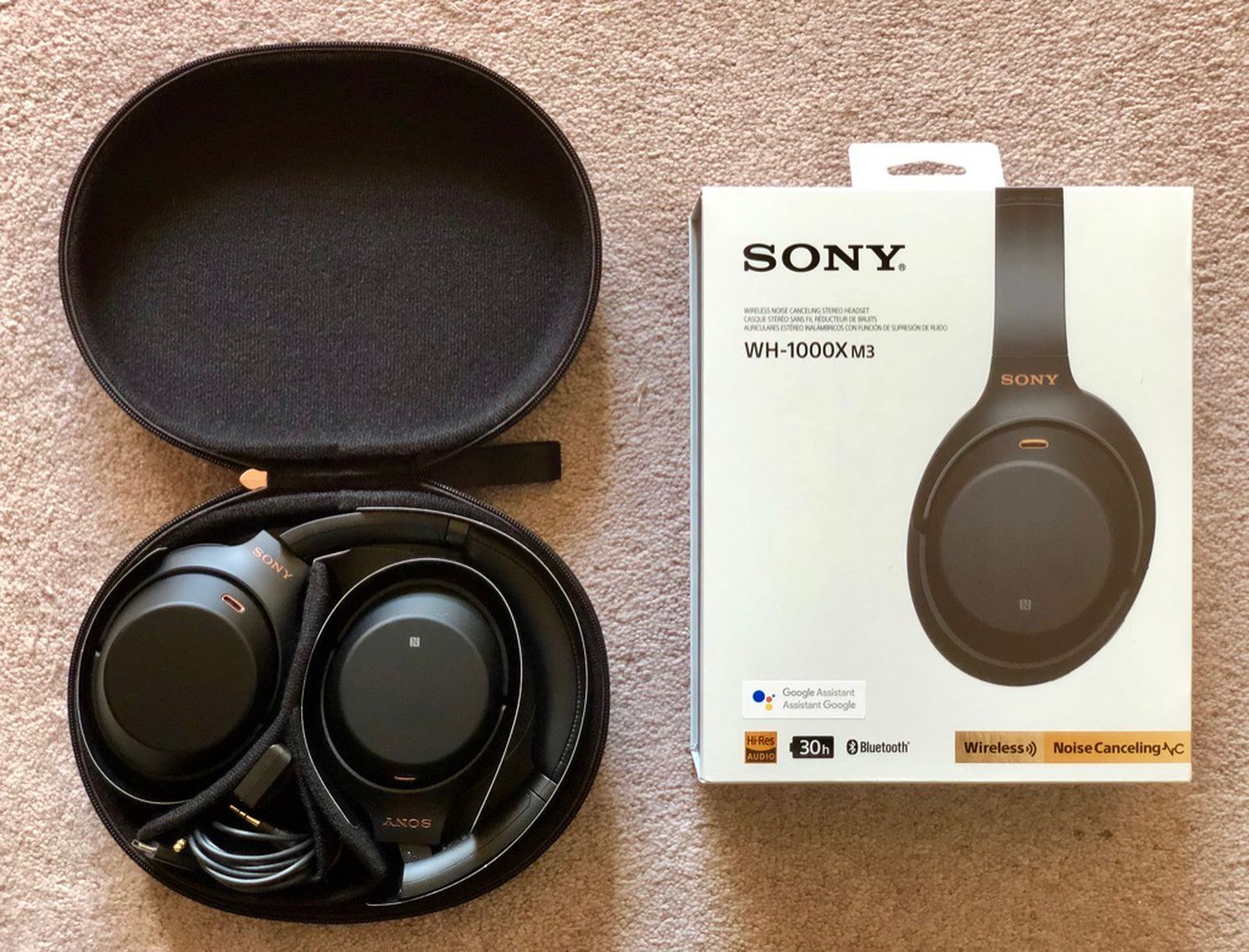
Sony threatened to upend the apple cart in 2016 when it released its flagship MDR-1000X can in a headphone market that had until then been dominated by Bose in the premium travel-grade noise-canceling category.
Combining excellent wireless sound with Active NC that makes even QuietComfort fans sit up and take notice, Sony’s awkwardly named headset proves that the Japanese company’s extensive acoustic R&D has finally hit a winner, giving rival NC headphone makers cause for concern in the process.
Unsurprisingly, Sony has attempted to improve on this winning formula in the intervening years, boasting another tongue-twisting rebrand of its flagship range (the eponymously named WH-1000X series) and two follow-up models boasting incremental improvements, both of which have been well-received.
Perhaps more surprising about these developments is Bose’s lack of response to them, at the time a tweaked version of its flagship QC35 cans was released with Google Assistant support. Whether it’s down to sheer confidence in the quality of its existing noise-canceling smarts or a lack of innovation, Sony’s adaptive NC technology and sonic prowess have largely surpassed the company, as these latest cans exemplify.
The WHX-1000XM3 is essentially an upgrade from last year’s 1000XM2, featuring a series of minor improvements that Sony believes collectively justify a new model number. Let’s take a look at them and see how far the company’s noise-cancelling range has come.
Design
On the face of it, Sony’s WH-1000XM3 headphones boast the same design signature as the previous 1000X models. They are available in two smaller colors – beige and black – and the ear cups rotate inward so they pack up neatly in the supplied carry case. The only distinctive markings on the outside of each cup remain the minimal Sony logo and tiny microphone grills, though they’ve picked up some neat brass-colored accents.
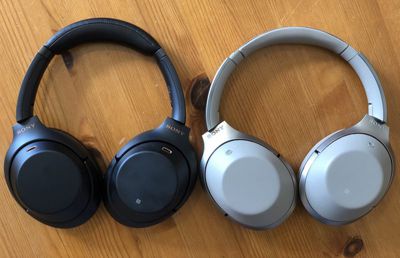
A closer look reveals more significant differences though. Gone is the exposed steel headband, now hidden in adjustable slats beneath thicker, more comfortable padding than the previous model. The foam urethane ear pads are also slightly larger and angled and allow for deeper in-ear space.
The most obvious ergonomic shift to occur though is in terms of weight. The XM3 is 22 grams lighter than the XM2 (and 10 grams lighter than Bose’s QC35 II), which may not sound like much, but it makes a real difference after hours of wear.

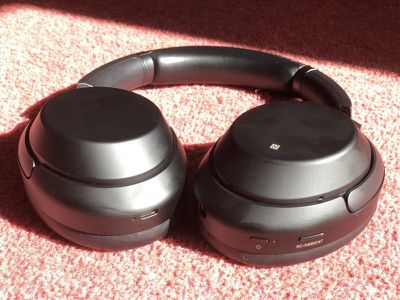
As with previous cans in the WH-1000X range, the left ear cup has two button control capabilities and noise-canceling/ambient noise features, making blind selection much easier than the original MDR-1000X cans’ distinct three-button affair. As before, the power button can be pressed quickly for battery level updates, and a long press activates the pairing sequence, while software-based options let you change the functionality of the ambient sound/NC button (more on that later). Unfortunately, the blue LED next to the power button still flashes continuously during operation, which can be vaguely annoying if you’re in the dark.
Sony has also switched up connectivity on this model: gone is the microUSB port on the right ear cup, replaced with a more up-to-date USB-C connection (the charging cable ends in USB-A). One thing that hasn’t changed is Sony’s love of gesture control: the right ear cup has a touch-sensitive back that responds to taps and swipes to control music playback, skip tracks, change volume, and summon your favorite virtual assistant. Like most modern headphone gesture pads, it can also be used to take calls. The good news is that the material Sony is now using to coat the pads is a little smoother, which generally makes gestures much more responsive than past models, so kudos for that.
Performance and features
As we mentioned at the beginning of this review, Sony pulled something special out of the bag when it released its MDR-1000X headphones, which boast next-level noise cancellation previously only achieved by the likes of Bose. With the 1000XM3, Sony has somehow done it again and made these cans four times more effective at dampening outside world sounds than the 1000XM2. After extensive testing, we can say that they consistently outperform Bose’s flagship headphones when it comes to killing outside noise in a variety of environments and uses.
This step-up improvement is partly related to the ambient sound control being more flexible and a bit smarter than previous models. Launch the Sony Headphones Connect app and you can manually drag a slider that changes the level of noise-canceling, allowing you to choose from 20 levels of maximum isolation, wind noise reduction or ambient attenuation. It’s great for finding your ideal NC range while you’re standing still, but you can switch to adaptive noise control when you’re on the move, and the built-in QN1 processor will do just as well by automatically adjusting its corresponding inversion. Frequency to block out whatever environmental noise comes your way.
As before, the headphones produce low-frequency sounds like jet engines and traffic, but Sony has also improved its proprietary chip in this model to reduce high-frequency sounds like voices. This doesn’t mean you won’t hear someone yelling at you from across the room, but it does make short work of background chatter in a busy coffee shop. On the flip side, the Focus on Voice feature is much better than its previous incarnation. It aims to let you hear important announcements – while you’re waiting to be called at a boarding gate, say – while still allowing you to enjoy your music in relative silence. The older Voice Mode had patchy performance and often failed to filter out other ambient sounds, but the WH-1000MX3 is much more discriminating.
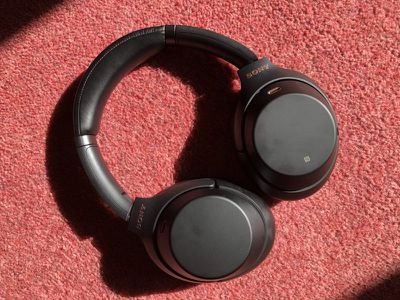
The QN1 chip doesn’t just excel in controlled NC either. Sony has thrown in an onboard DAC and an analog amplifier, with support for 32-bit audio signal processing and reproduction of the full range of frequencies up to 40 kHz. These smarts allow the cans to deliver consistently higher signal-to-noise ratios and lower distortion, and let me enjoy clear, crisp audio in all supported AAC (iPhone), aptX/aptX HD (Mac/Android), SBC. (everything) and LDAC wireless codecs. The mid-range is wonderfully balanced and the highs sparkle on instrumental tracks, while a powerful but controlled bass provides a solid foundation.
You’d be forgiven for thinking that all the technology in these cans would inevitably be a power drain, but Sony has impressed by eking out 30 hours of wired/wireless battery life on a single charge, and you can get five hours’ worth after charging with the optional AC adapter in just 10 minutes with the power outlet. connected (versus the WH-1000XM2’s 70 minutes). This gave me plenty of time to play with additional app features, including the Sound Position control that lets you change the perceived directional source of your audio, not to mention the welcome surround sound mode and EQ sliders.
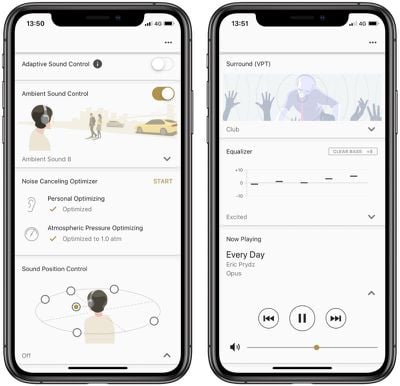
Digging deeper into the software controls, it’s now possible to adjust the automatic power-off feature, which activates when no audio signal is detected. You can even turn it off, which is super handy if you want to keep NC active without listening to audio. You can optionally change the functionality of the NC/ambient button on the left ear cup to activate Google Assistant, Siri and (the most recently added) Alexa. It’s a neat way to quickly ask simple questions, but it also means you can use your favorite virtual assistant to play music and skip tracks on the fly.
Happily, Sony has also carried over all its popular features from previous models. The left ear cup still has an NFC chip for quick pairing with compatible devices, while there’s Sony’s unique innovation in the NC space: hidden inside both ear cups are the same microphones that use Sony’s “Personal NC Optimizer” to sample and cancel ambient noise with similar inversion frequencies. A wide range of sounds out. Press the NC button, and the headphone speakers emit a series of tones into the mic to work out the shape of your head, whether you have long hair, wear glasses, etc.
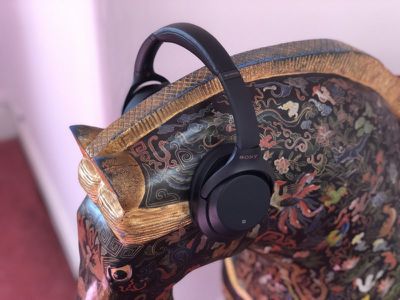
Sony actually tweaked this model’s optimizer to include atmospheric pressure, and I found it worked better during flight. Another feature unique to the company’s Sense Engine called “quick attention” was easy to test. Cup your fingers over the right ear cup and the volume instantly drops to let in the outside world – bring your hand down again and the music returns to its previous volume. This is really useful in situations where you would normally have to take off the headphones – like when a flight attendant offers you refreshments.
As with previous models, the WH-1000XM3 pack one of the strongest Bluetooth connections I’ve seen in headphones, and consistently maintain a connection in areas where rival Bluetooth headsets routinely falter. By default, the headphones automatically select the highest quality Bluetooth protocol available, but you can still change the priority between the most stable connection and the highest audio quality, which is now done in the iOS app.
Before we wrap up, it’s worth noting that, inexplicably, Sony’s 1000X range still doesn’t support dynamic switching between audio sources. Bose’s QC35 has no problem pairing with two devices and automatically switching between them based on which audio signal is being transmitted, so it’s surprising that the 1000XM3 doesn’t have this capability, and in our Bluetooth-saturated age, how handy the feature is. It is hard to overstate it. Having to manually disconnect the 1000XM3 from your iPhone so you can connect to your Mac and vice versa just feels awkward, yet Sony’s cans had no problem automatically pairing with the last known device whenever I turned them on. I do
last row
Sony’s ability to continue improving its WH-1000X series of wireless headphones is largely thanks to its dedicated acoustic research, which currently requires a lot of work to get anywhere near the same quality as rival manufacturers of premium noise-canceling cans.
Customizable and adaptive NC smarts prove that Sony’s technology has come leaps and bounds from the original MDR-1000X model, while improvements in battery life and sound quality make for a better listening experience. If the company can take a leaf out of Bose’s book and add dynamic device switching in the next version, they’ll be virtually untouchable for a long time.
professional
- The best noise cancellation in the business
- Exceptional sound in both wired and wireless modes
- Great battery life
- Advanced design and touch controls
cons
- Dynamic audio device switching is lacking
- Flashing operating LEDs can be annoying
how to buy
The Sony WH-1000MX3 headphones come in beige or black, cost $349.99, and can be ordered on the Sony website or Amazon.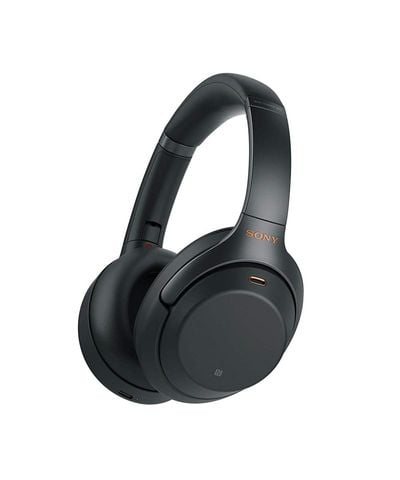 Note: Sony has supplied the WH-1000MX3 MacRumors For the purpose of this review. No other compensation was received.
